
Views: 0 Author: Site Editor Publish Time: 2026-07-28 Origin: Site
Applying incorrect steam heat to high-value garments carries significant financial and practical risks. Irreversible damage, such as scorching, melting, or felting, often occurs within seconds when the wrong technique is used. Different fibers, ranging from delicate silks to heavy linens, possess unique thermal and moisture thresholds. Users frequently fail to adjust their steaming distance, treating all fabrics with a one-size-fits-all approach. This mistake leads to garment distortion, water staining, or ineffective wrinkle removal.
Mastering the physical distance between the steamer head and the fabric is the most critical variable in garment care. You must pair these distance guidelines with correct hardware and proper garment preparation. Ensuring items are fully dry and clean before starting is essential for success. Understanding how to manipulate distance allows you to safely process everything from sturdy denim to fragile chiffon without compromising the structural integrity of the weave.
Distance Dictates Temperature: The space between the steamer nozzle and the garment exponentially reduces heat and moisture intensity; delicate fabrics require a minimum of 6 to 8 inches of clearance.
Fiber-Specific Thresholds: Sturdy natural fibers (cotton, linen) tolerate close proximity or direct contact, while synthetics (polyester) and animal fibers (wool) require hovering to prevent structural melting or shrinkage.
The Prep Rule: For optimal results and to prevent fiber damage, only apply steam to hanging garments that are pre-washed and completely dry.
The "When in Doubt" Principle: Always err on the side of lower heat settings and greater distance first, gradually moving closer only as the fabric allows.
Hardware Capabilities Matter: A standing garment steamer typically offers better variable steam control for delicate distance management compared to a fixed-output handheld garment steamer.
Risk Mitigation is Mandatory: Always utilize attachments (like delicate fabric guards, steam bonnets, or pressing cloths) and test on hidden seams before applying steam to the main body of the garment.
Successful steaming relaxes the polymer bonds of the fiber to release wrinkles without exceeding the material's glass transition temperature. Exceeding this temperature causes permanent damage. The goal is to apply just enough heat and moisture to reshape the garment safely. Proper technique ensures the fabric returns to its original state without distortion. When you apply steam, you are essentially resetting the memory of the fabric. If you push past the thermal limit, that memory is erased, leaving you with a warped or melted piece of clothing.
Hydrophilic natural fibers absorb water readily, while hydrophobic synthetic fibers repel it. Excess moisture leads to water spotting on silks. Conversely, excess heat causes structural melting in synthetics. Understanding these properties helps you determine the correct approach for each material. Natural fibers swell when they absorb steam, which helps them release creases. Synthetics do not absorb the moisture; they only react to the heat. This is why distance control is non-negotiable.
Steam cools rapidly as it travels through the air. Closer proximity equals higher heat and deeper moisture penetration. Greater distance results in cooler, surface-level moisture. Adjusting the distance allows you to control the exact temperature reaching the fabric surface. At the nozzle, steam is at its boiling point. Just a few inches away, the temperature drops significantly. This rapid cooling is your primary tool for protecting delicate weaves.
Steaming damp or unwashed clothing traps odors, causes fiber stretching, and leads to water spots. Garments must be completely dry and hung vertically before steaming. This preparation prevents dirt from setting into the fibers and ensures uniform wrinkle release. If you steam a shirt that has been worn all day, the heat will bake the sweat and body oils directly into the cotton or polyester, making them nearly impossible to wash out later.
Keep the steamer 6 to 8 inches (15–20 cm) away from delicate fabrics like silk, chiffon, lace, and organza. Set the unit to minimal steam volume. Steam from the inside out when possible. Use a damp pressing cloth if closer proximity is required to avoid water spots and thermal shock. Silk is highly susceptible to water rings. If your steamer spits even a single drop of boiling water onto raw silk, it can leave a permanent mark.
Maintain a distance of 4 to 6 inches away for synthetics like polyester, nylon, spandex, and acrylic. Keep the nozzle moving continuously. Avoid direct soleplate contact, which can cause micro-melting. This melting results in a permanent, unnatural shine on the fabric surface. Synthetics are essentially plastics. When plastic gets too hot, it deforms. You must keep the steam head moving to prevent heat buildup in any single area.
Position the steamer 0 to 1 inch away for sturdy natural fibers like cotton, linen, and denim, as direct contact is often permissible. Dense fibers require maximum heat and moisture penetration to relax stubborn wrinkles. Pull the fabric taut while applying the steamer head directly to the material. Linen is notoriously difficult to smooth out. You need the physical pressure of the steamer head combined with high heat to break down the heavy creases.
Hold the steamer 2 to 4 inches away for wool and animal fibers like cashmere, merino, and alpaca. Combining high heat, moisture, and friction causes "felting" and shrinkage. Hover the steamer and gently pat the fabric into shape to prevent structural damage. Wool fibers have microscopic scales. When exposed to heat and agitation, these scales lock together, causing the garment to shrink and become dense.
Maintain a distance of 3 to 5 inches away for heavy home textiles and woolen blankets. Refresh bulky, non-apparel items by hovering the steamer. This technique sanitizes and releases wrinkles without compressing the loft or causing fabric shrinkage. Blankets and curtains hold a lot of dust. Steaming them from a moderate distance helps kill dust mites and remove stale odors without soaking the heavy material.
Certain materials suffer catastrophic failure when exposed to steam. Acetate will melt and pucker immediately. Leather and suede will permanently discolor, lose their natural oils, and stiffen. Never use a Garment Steamer on these items. If you attempt to steam a leather jacket, the heat will strip the tanning oils, leaving the hide brittle and cracked.
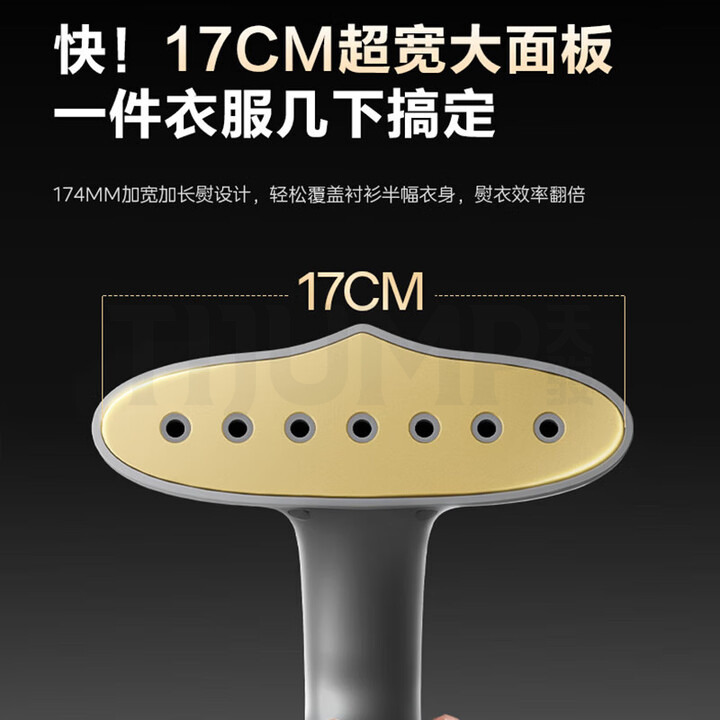
Handheld units offer portability and quick heat-up times. They are ideal for sturdy fabrics requiring close-contact touch-ups. However, they often lack variable steam settings. Smaller water tanks can lead to sputtering, making the required 6-8 inch distance for delicates risky if the output is inconsistent. A handheld garment steamer is best reserved for travel or quick morning touch-ups on cotton shirts.
The built-in structure of larger units allows you to use both hands effectively. One hand holds the steamer head at a precise distance, while the other pulls the garment taut. Multiple steam intensity settings allow for safer handling of wools and silks. The trade-off is a larger footprint requiring dedicated space. A standing garment steamer provides the stability needed to process a high volume of clothing safely.
A jet steam ironing machine delivers highly pressurized, dry steam. It is excellent for heavy linens and denims. The high velocity of the steam means distance must be carefully managed. Failure to do so can blow delicate fabrics off the hanger or cause severe user burns. These machines are powerful tools that require a steady hand and a clear understanding of fabric limits.
Mineral buildup in the steamer or overfilling the tank causes spit-out. Use distilled water and descale the unit regularly. Always point the steamer away from the garment for the first 10 seconds of operation to clear condensation. Hard water deposits will clog the steam holes, causing pressure to build up and eventually release boiling water droplets onto your clothes.
Holding the steamer too close for too long on unstable knits causes shrinkage. Keep the steamer head moving continuously. Never linger on a single spot for more than 3 seconds to protect the structural integrity of the fibers. If a wrinkle is particularly stubborn, steam it, let the fabric cool for a moment, and then hit it again rather than holding the heat on it continuously.
Attachments provide a physical barrier between the heat source and the fabric. Bristle brushes open heavy weaves like wool coats for better penetration. Delicate fabric spacers and bonnets physically prevent the metal or plastic soleplate from touching the garment, ensuring safe distance management. Using a bonnet diffuses the steam, making it much safer for processing large areas of delicate material like a silk dress.
Fill the water tank with distilled water to prevent mineral buildup.
Turn the unit on and allow it to reach full operating temperature.
Point the nozzle away from the garment for 10 seconds to clear any sputtering water.
Identify the fabric type and determine the appropriate steaming distance.
Pull the bottom hem of the garment taut with your free hand.
Apply steam using smooth, continuous downward strokes.
Allow the garment to hang and cool completely before wearing or storing.
Investing in a unit with high/low switches offers a better return on investment than single-speed models. A diverse wardrobe necessitates variable control. This control helps manage steam volume at different distances safely. If you only own heavy cotton workwear, a single-speed unit might suffice. But if your closet includes a mix of synthetics, wools, and silks, variable control is a strict requirement.
Metal soleplates retain heat and act like an iron for cottons, while plastic nozzles are less likely to scorch synthetics upon accidental contact. "Even Steam" soleplate designs feature uniform steam-hole layouts. This prevents hot-spotting and allows for more consistent heat application at safe distances. When evaluating a steamer, look at the nozzle design. A wider nozzle with evenly spaced holes will process garments faster and more safely than a narrow nozzle with clustered holes.
Fabric Category | Specific Materials | Required Distance | Hardware Recommendation |
|---|---|---|---|
Delicates | Silk, Chiffon, Lace | 6 to 8 inches | Standing unit on low setting |
Synthetics | Polyester, Nylon, Acrylic | 4 to 6 inches | Any unit with a fabric guard |
Sturdy Natural | Cotton, Linen, Denim | 0 to 1 inch | High-pressure jet machine |
Animal Fibers | Wool, Cashmere, Alpaca | 2 to 4 inches | Standing unit with bristle brush |
Do Not Steam | Leather, Suede, Acetate | N/A | N/A |
Verify the fabric composition on the care label before turning on your equipment.
Establish the correct distance based on the fiber type, starting further away and moving closer only if necessary.
Use distilled water and clear the nozzle for 10 seconds prior to applying steam to the garment.
Keep the steamer head moving continuously to prevent localized heat damage or water spotting.
A: Never steam clothes while they are on your body. Steam reaches temperatures capable of causing severe burns instantly. Always hang garments vertically on a stable rack or hanger before applying steam.
A: Spitting usually occurs due to mineral buildup inside the unit or overfilling the water tank. Use distilled water, descale the steamer regularly, and let it run away from the garment for 10 seconds before starting.
A: Proceed with extreme caution when steaming vintage items. Old fibers can be brittle. Test a hidden area first, keep the steamer at least 8 inches away, and use the lowest possible steam setting.
A: Linen requires high heat and moisture. Pull the fabric taut and apply the steamer head directly to the material. Moving slowly allows the steam to penetrate the dense fibers fully.
A: Yes, steam can help neutralize light odors and kill surface bacteria. However, it does not replace washing. Ensure the garment is clean and dry before steaming to avoid setting dirt or sweat into the fibers.


