
Views: 0 Author: Site Editor Publish Time: 2026-09-05 Origin: Site
High-end garment maintenance is shifting from outsourced dry cleaning to specialized in-home appliance technology. Traditional washers and dryers rely on mechanical agitation and high heat, which degrade delicate fibers over time. Professional dry cleaning introduces harsh chemical solvents like PERC into your wardrobe and creates frustrating recurring costs. Running a full wash cycle just to refresh stored or lightly worn clothes causes unnecessary wear and tear on expensive fabrics.
For buyers evaluating a dedicated clothing care machine, understanding the precise coordination of steam injection, low-heat drying, and UV sanitization determines if the appliance will actually preserve wardrobe longevity. You need to know how it effectively refreshes seasonal garments and delivers a positive return on investment. We will break down the exact mechanical processes these units use to handle daily fabric care without the damage associated with standard laundry machines.
Sequential Precision: Effective garment care relies on a strict sequence—steam for fiber relaxation, heat-pump drying for moisture extraction, and UV-C for sanitization—preventing fabric damage.
Temperature Control: Unlike traditional dryers that bake moisture out, a premium clothing care steam closet utilizes low-temperature heat pump technology to dry without shrinking or warping fibers.
Sanitization & Allergen Efficacy: The integration of UV light alongside steam targets bacteria, viruses, allergens, and odor-causing molecules that standard washing cannot eliminate without boiling temperatures.
Smart Automation & Post-Cycle Care: Modern units function as a remote control garment care dryer, utilizing internal humidity sensors to dynamically adjust cycle lengths and employing post-cycle ventilation to keep clothes fresh if not immediately removed.
Defining safe garment refreshing requires looking at the mechanical environment. Buyers often confuse the high-heat steam tumbling of a standard washer or dryer with the static, controlled environment of a dedicated cabinet. Standard laundry appliances prioritize heavy stain removal and rapid bulk moisture extraction. Dedicated care cabinets prioritize structural preservation, fiber relaxation, and odor neutralization.
Conventional washers and dryers that advertise a steam effect typically achieve this by spraying liquid water directly onto a hot metal drum during the heating phase. This rudimentary method presents several mechanical problems for delicate fabrics. It leaves garments uncomfortably damp. It causes localized thermal damage where wet fabric contacts the hot metal drum. The water droplets generated by this method are too large to properly permeate the textile structure, leading to uneven moisture distribution.
Standard washer steam cycles often fail on high-end garments due to these specific mechanical limitations:
Large water droplet size causes permanent water spots on silk and satin.
High drum temperatures melt or distort elastane and spandex fibers.
Mechanical tumbling causes friction, leading to pilling on wool and cashmere.
Incomplete moisture extraction leaves garments prone to mildew if not immediately hung in a ventilated space.
Hanging garments in a static chamber changes the physics of garment care. Traditional tumble drying relies on friction and impact. Clothes drop against each other and the drum walls repeatedly. This friction causes micro-tears and structural fatigue in the weave. A static cabinet prevents this mechanical wear. Gravity assists in pulling wrinkles out while the fabric remains completely undisturbed on a hanger.
Dedicated cabinets generate true steam via an independent internal boiler. The boiler creates superheated dry steam in a separate chamber before injecting it into the main cabinet. The resulting steam particles are microscopic. They carry enough thermal energy to evaporate moisture and relax fibers instantly. Because the steam is classified as "dry," it does not leave garments wet to the touch. This eliminates the risk of mold developing inside the cabinet or on the clothing.
The first active phase of the care cycle relies entirely on precise moisture application. Steam acts as a physical tool used to manipulate the molecular structure of textiles. The boiler heats distilled water past 212°F, converting it into a fine vapor that is pumped through nozzles located at the back or bottom of the cabinet.
Micro-steam particles penetrate natural and synthetic fibers deeply. Cotton, linen, and wool contain hydrogen bonds that lock into place when the fabric is dry. These bonds cause wrinkling and creasing during wear or storage. Steam introduces thermal energy and moisture, temporarily breaking these hydrogen bonds. Once the bonds are broken, the weight of the garment hanging on the rack pulls the fibers straight. As the fabric cools and dries in the next phase, the bonds reform in a smooth, flat configuration.
Utilizing steam refreshes clothes that have been stored away for months in attics or basements. The steam penetrates deep into the weave to neutralize musty odors and release sharp storage creases. You achieve a wearable garment in under an hour without subjecting fragile winter coats or summer linens to a full wash cycle.
When assessing an automatic wrinkle removal machine, you must understand its component capabilities and realistic limitations.
Steam-based wrinkle removal easily handles light creases on button-down shirts, blouses, and daily wear.
It is not a replacement for a hard, pressed crease on formal dress trousers. You still need a traditional iron for sharp pleats.
The system relies on a clean water reservoir, a high-efficiency boiler, and strategically placed internal nozzles to distribute steam evenly across the entire length of the hanging garment.
Moving hangers oscillate at high frequencies to physically shake the fabric, accelerating the wrinkle release process.
Calcium and magnesium deposits from hard tap water will eventually clog the internal boiler and steam nozzles. This scaling severely degrades performance and can cause the boiler element to overheat and fail. You must use distilled water in reservoir models. If you connect a plumbed model to a municipal water line, you must install an inline water softener or adhere to strict, regular descaling maintenance schedules using citric acid solutions.
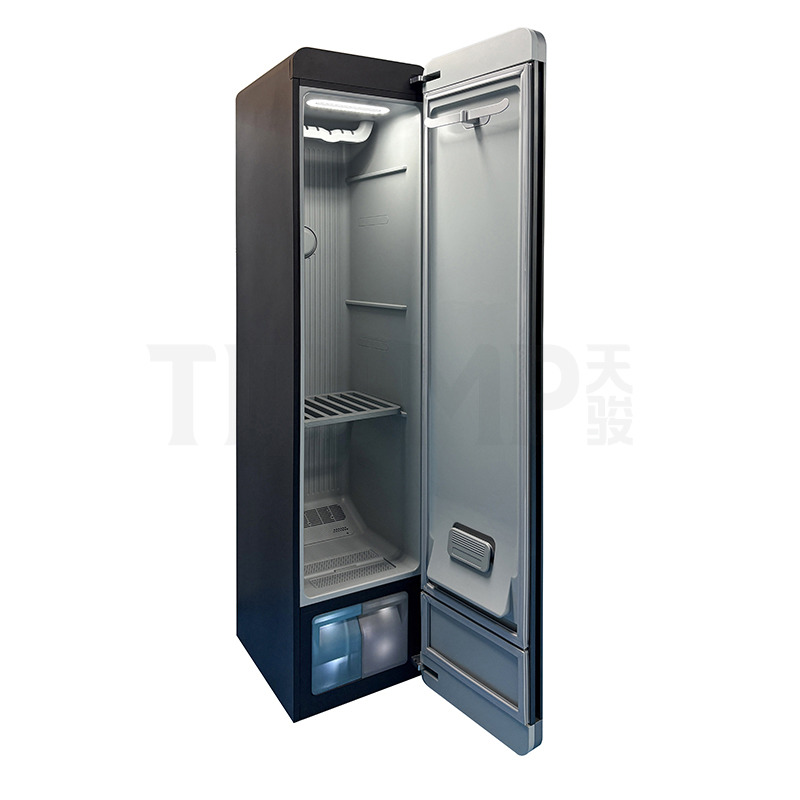
Once the steam phase concludes, the machine must extract the introduced moisture. Leaving garments damp in a sealed cabinet invites bacterial growth and mildew. The drying phase must be gentle, efficient, and capable of removing the odors that the steam just lifted from the fabric.
A premium clothing care steam closet relies on sophisticated airflow dynamics. Internal fans circulate air continuously from the bottom of the unit to the top exhaust vents. This constant movement lifts away the moisture introduced during the steam phase. The airflow is carefully calibrated. If it is too aggressive, garments blow off their hangers. If it is too weak, the drying cycle takes several hours and leaves pockets of humidity in heavy fabrics.
The method of heating the air dictates the lifespan of your garments. Conventional vented dryers use electric resistance coils that blast air at temperatures exceeding 150°F. This bakes the fabric, damages elastic, and causes severe shrinkage.
Heat pumps operate using a closed-loop refrigerant system. A compressor pushes refrigerant through an evaporator coil and a condenser coil. The evaporator cools the cabinet air, pulling moisture out as condensation. The condenser then reheats that dry air. The air circulates back into the cabinet. This process extracts moisture at much lower temperatures, typically around 100°F to 120°F. This closed-loop system prevents the thermal damage, warping, and shrinkage associated with standard heating elements.
Deodorization is a two-step physical process targeting volatile organic compounds (VOCs). First, the superheated steam binds to VOCs trapped in the fabric, such as smoke, sweat, and food odors. Second, the drying phase physically removes these loosened particles. As the heat pump circulates the air, it pulls the odor-laden moisture through the machine’s internal filtration system. The VOCs condense with the water and drain into the wastewater tank, leaving the garment smelling completely neutral.
Washing in cold water saves energy but leaves many pathogens intact. The integration of ultraviolet light provides hospital-grade sanitization for garments that cannot withstand hot water washing.
The scientific mechanism behind a UV steam clothing care cabinet relies on specific light spectrums. These machines utilize UV-C wavelengths, specifically peaking around 253.7 nanometers. This spectrum is highly germicidal. It physically penetrates the cell walls of bacteria, viruses, and mold spores. The UV-C radiation destroys their nucleic acids, disrupting their DNA and RNA. Once their cellular structure is damaged, these pathogens cannot reproduce and quickly die off.
Standard cold-water washes fail to eliminate common household allergens. Dust mites and pet dander easily survive traditional laundry cycles. The combination of deep-penetrating steam and surface-level UV-C light works in tandem to neutralize these threats.
The steam heat penetrates deep into the padding of heavy coats to kill dust mites.
The UV-C light neutralizes surface-level mold spores and bacteria on the exterior of the fabric.
The high-frequency moving hangers shake loose the neutralized dander and dust, dropping it into the bottom filter.
System logic dictates the exact timing of the UV exposure. UV light is timed specifically during or immediately after the drying phase. Heavy moisture in the air refracts and scatters UV light, reducing its intensity. If the cabinet is full of dense steam, the UV rays will not hit the garments evenly. Applying UV-C to dry or actively drying garments ensures maximum surface penetration and guarantees the highest possible sanitization efficacy.
Prolonged exposure to UV light fades textile dyes. Premium machines mitigate this trade-off through strict engineering controls. They control exposure times down to the minute, usually only activating the diodes for the final stages of the cycle. They use targeted diode placement to ensure the light hits the fabric evenly but only for the exact duration required for sanitization. Door interlock switches immediately cut power to the UV lights if the cabinet is opened, ensuring user safety.
Modern garment care relies on automated intelligence to protect different fabric types. You do not have to guess how long to steam a silk shirt versus a heavy wool peacoat. The internal computer handles the environmental adjustments.
High-end cabinets utilize internal hygrometers and thermistors. These sensors monitor real-time humidity and temperature within the chamber. They coordinate the transition between the steam, dry, and UV phases automatically. If you place a heavy, damp denim jacket inside, the hygrometer reads the high humidity levels and extends the heat pump drying phase without requiring user intervention.
Wi-Fi connectivity transforms the appliance into a highly scalable tool. A modern remote control garment care dryer connects to companion smartphone apps. Users download highly specific cycles for niche fabrics. You can pull down custom algorithms for leather, fur, or heavy denim. These specialized cycles alter the steam and UV ratios to protect delicate materials. For example, a leather cycle completely disables the steam boiler and relies solely on gentle ambient airflow and UV sanitization.
Standard dryers require extended tumbling to prevent wrinkles if clothes aren't immediately removed. This wastes energy and damages clothes. Smart cabinets use intermittent ventilation and gentle heat to maintain a fresh, wrinkle-free environment. You can leave your clothes in the cabinet overnight. The machine will periodically circulate air, ensuring the garments remain perfectly preserved until you open the door the next morning.
Airflow and steam require mechanical assistance for heavy fabrics. Premium models incorporate moving hangers that oscillate at 150 to 200 vibrations per minute. These hangers operate in tandem with the steam and airflow. They physically shake the garments to dislodge embedded particulate matter. This mechanical action greatly assists in wrinkle release by forcing the relaxed fibers to fall straight while the steam breaks the hydrogen bonds.
Selecting the correct unit requires matching the machine's specifications to your household's realistic laundry habits. You must evaluate spatial constraints, electrical requirements, and plumbing capabilities.
Assess the footprint versus the utility of the machine. A slim, three-hanger model is usually sufficient for an individual professional and fits easily into a standard walk-in closet. A wider, five-hanger model is necessary for families. You must account for door clearance and the necessary ventilation gaps. Most heat pump models require at least two inches of clearance behind the unit and one inch on the sides for proper air intake and exhaust.
The method of water delivery dictates where you can install the unit and how much daily maintenance it requires.
Feature | Plumbed Systems | Reservoir Systems |
|---|---|---|
Installation Requirements | Requires professional installation to a direct water line and a dedicated drain pipe. | Plug-and-play setup. Requires only a standard 120V grounded electrical outlet. |
Daily Convenience | Maximum convenience. Never requires manual filling or emptying of water tanks. | Requires manual emptying of the wastewater tank and filling of the clean supply tank. |
Placement Flexibility | Strictly limited to laundry rooms, mudrooms, or areas with existing plumbing access. | Can be placed anywhere in the home, including bedrooms, closets, or entryways. |
Maintenance Needs | Requires inline water softeners or professional descaling if connected to hard city water. | Requires the user to purchase and manually fill the tank with distilled water. |
These machines draw significant power during the steam generation phase. The boiler requires rapid heating. Most units require a standard 120V grounded receptacle. However, you must ensure the circuit can handle a 15-amp draw. Plugging the cabinet into a shared circuit with other high-draw appliances like space heaters or hair dryers will trip the breaker.
Measure your intended installation alcove, ensuring a minimum of two inches of clearance behind the unit for proper heat pump airflow.
Test your home's tap water hardness to determine if you must purchase distilled water to prevent boiler scaling.
Verify your closet or bedroom has a grounded 120V receptacle on a circuit that can handle a 15-amp draw.
Sort your wardrobe to identify the ratio of heavy winter coats to daily suits, dictating whether you need a three-hanger or five-hanger capacity model.
A: Washers spray liquid water onto a hot metal drum, creating large droplets that can cause thermal damage and water spots. A dedicated care machine uses an independent internal boiler. It generates superheated dry steam vapor. This microscopic vapor penetrates fibers evenly without leaving the garment wet or exposing it to hot metal surfaces.
A: No. These appliances excel at refreshing fabrics, neutralizing odors, and relaxing daily wrinkles. They do not use chemical solvents like perchloroethylene. Therefore, they cannot dissolve heavy, set-in stains like oil, ink, or wine. You still need a professional cleaner for targeted stain extraction on delicate garments.
A: The internal boiler heats water past 212°F to create vapor. However, the ambient temperature inside the cabinet is strictly regulated by thermistors. The air surrounding your garments typically stays between 100°F and 120°F. This specific range relaxes fibers effectively while preventing the thermal shrinkage associated with standard dryers.
A: Prolonged UV exposure fades textile dyes. Manufacturers prevent this by utilizing precise exposure timers and targeted diode placement. The UV-C lights only activate for a few minutes at the end of the cycle. This provides enough radiation to destroy surface pathogens without causing long-term color degradation to your clothes.
A: Most consumer models do not require plumbing. They operate using a reservoir system located at the base of the unit. You manually fill the supply tank with distilled water and empty the wastewater tank after a few cycles. High-end built-in models do offer direct plumbing options for continuous operation.
A: Yes, provided you select the correct cycle. Silk and wool require gentle steam and low-heat drying to prevent fiber distortion. Leather and fur should never be exposed to steam. You must use specific downloadable cycles that disable the boiler and rely solely on ambient airflow and UV sanitization for these materials.


