
Views: 0 Author: Site Editor Publish Time: 2026-08-14 Origin: Site
The external dimensions of an appliance rarely tell the full story of its internal capabilities. In laundry appliances, the physical frame architecture directly dictates internal drum volume, airflow dynamics, and mechanical stability. Buyers frequently misjudge the correlation between a unit's footprint and its actual load capacity. This mismatch leads to overloading, accelerated mechanical wear, increased energy consumption, and extended drying times. To make an informed purchasing decision, you must evaluate how different frame designs impact functional capacity, long-term operational efficiency, and environmental footprint. Understanding the structural limitations of a clothes dryer prevents premature equipment failure. It ensures the selected unit aligns with daily throughput requirements. We see this constantly in the field: a machine looks large enough on the showroom floor, but the internal chassis restricts actual performance once installed in a residential laundry room.
Drum Volume vs. Frame Size: Internal drum capacity scales linearly with exterior frame volume, but weight capacity does not follow a strict one-to-one correlation due to structural and motor limitations.
Airflow Requirements: A larger frame allows for optimized internal clearance, which is critical for heat distribution, preventing clothing wear and tear, and accommodating advanced heating technologies.
Form Factor Trade-offs: Downsizing to compact or portable models requires sacrificing load throughput and accepting longer cycle times to accommodate restricted chassis dimensions.
Installation Realities: Evaluating a clothes dryer requires factoring in external frame dimensions plus mandatory operational clearances for ventilation, power, and maintenance access.
Defining what constitutes capacity requires separating volumetric measurements from functional weight limits. You must distinguish between volumetric capacity, measured in cubic feet, and functional weight capacity, measured in pounds of wet laundry, to establish accurate throughput expectations. A machine might offer vast internal space, but if the motor and suspension cannot handle the physical weight of saturated fabrics, that volume remains functionally useless. Establishing clear success criteria means evaluating how the appliance handles the physical stress of heavy loads during continuous operation.
Standard chassis dimensions for residential units typically measure 27 inches in width. This external measurement serves as a hard boundary for internal engineering. Casing thickness, acoustic insulation, and motor placement strictly restrict the maximum possible drum size. Engineers must leave adequate clearance between the rotating drum and the exterior panels to prevent friction, accommodate drive belts, and allow for thermal expansion during high-temperature cycles. When we open up these machines for maintenance, the space between the drum and the side panels is often less than an inch.
The engineering constraints of maintaining structural integrity while maximizing the internal cylinder require precise material selection. The drum must be large enough to allow fabrics to separate and tumble, yet small enough to leave room for the blower wheel, heating elements, and exhaust pathways. If the drum sits too close to the exterior frame, the appliance risks severe heat transfer to the outer casing, creating safety hazards and reducing the efficiency of the internal drying environment. Manufacturers use heavy-gauge steel for the base frame to anchor the motor, while the side panels are often lighter steel stamped with geometric patterns to increase rigidity without adding bulk.
Standard Component Clearances Within a 27-Inch Chassis
Component | Location Within Frame | Required Clearance (Approximate) | Function Impacted by Space |
|---|---|---|---|
Drive Motor | Bottom rear or bottom right | 2 to 3 inches | Thermal dissipation, belt alignment |
Blower Wheel | Front or rear bulkhead | 1.5 to 2 inches | Airflow generation, static pressure |
Heating Element | Rear bulkhead or bottom duct | 2 to 4 inches | Fire prevention, heat distribution |
Drum Rollers | Front and rear bulkheads | 0.5 to 1 inch | Rotational stability, weight distribution |
Examination of empirical data reveals a strict operational reality: a 20% increase in drum volume does not automatically yield a 20% increase in maximum wet-load weight. Volumetric expansion provides more room for air circulation, but the physical weight a machine can rotate depends entirely on its mechanical backbone. Wet laundry is exceptionally dense. A standard cotton bath towel weighs about 1.5 pounds dry but can exceed 3 pounds when saturated. A drum designed to hold large, lightweight items like down comforters will fail if loaded with the equivalent volume of saturated denim.
The true load limits within a specific frame size depend heavily on the suspension systems, bearing strength, and drive motor torque. When a heavy wet load drops during the tumbling cycle, the impact transfers directly to the drum rollers and the idler pulley. If the frame lacks the rigid structural support necessary to absorb these kinetic impacts, the internal components will warp or fracture. Therefore, functional capacity is capped by the weakest mechanical component, regardless of how much empty space exists inside the drum. We frequently replace flattened drum rollers on machines where users assumed a large drum meant unlimited weight capacity.
Comparing standard residential frames against oversized configurations determines the optimal fit for high-volume needs and advanced heating technologies. Different architectural approaches dictate how well a machine processes moisture, handles continuous duty cycles, and integrates into existing structural floor plans. You must match the frame architecture to the specific demands of the household or facility.
Baseline metrics for the standard traditional clothes dryer typically feature average capacities ranging from 5.0 to 7.4 cubic feet. This volume serves as the industry standard, designed specifically to handle the output of average household laundry tasks without overwhelming standard electrical or gas connections. These units utilize a proven structural layout that balances internal volume with external spatial constraints. The 27-inch width is ubiquitous because it aligns with standard residential construction practices.
Standard frame designs balance the need to fit through standard residential doorways, which generally measure 28 to 30 inches wide, with the necessity of matching the throughput of a standard 2.5 to 3.5 cubic foot washing machine. This 27-inch width limitation forces manufacturers to optimize vertical space and depth. The internal geometry is calibrated to ensure that a full load from a standard washer has enough room to expand as moisture evaporates. This expansion space prevents the fabrics from clumping together and blocking the exhaust vents, which would otherwise cause the high-limit thermostat to trip.
Comparison of Clothes Dryer Frame Architectures and Capacities
Frame Architecture | Average Capacity (Cubic Feet) | Typical Width | Primary Use Case |
|---|---|---|---|
Standard Traditional | 5.0 - 7.4 | 27 inches | Standard residential laundry, 1:1 washer replacement |
Large Capacity | 7.5 - 9.0+ | 27 - 29 inches | High-volume households, bulky items (king-size bedding) |
Compact / Portable | 1.5 - 3.4 | 23 - 24 inches | Apartments, RVs, tight spatial constraints |
Micro-Frame (Travelling) | N/A (Garment Count) | Variable (Collapsible) | Transient travel, hotel use, emergency drying |
Structural differences become highly apparent in units exceeding 7.5 cubic feet. Upgrading to a large capacity electric clothes dryer involves more than just a larger metal box. The chassis must be reinforced with heavier-gauge steel to prevent the frame from twisting under the immense rotational torque generated by 20 to 30 pounds of wet fabric. The drum itself often features advanced baffling to continuously redirect heavy items toward the center of the airflow path. Without this reinforced chassis, the machine would literally tear itself apart during a heavy cycle.
Expanded frames accommodate larger blower wheels and enhanced heating elements to process heavy items, such as king-size bedding, without compromising drying times. A larger blower wheel moves a higher volume of cubic feet per minute (CFM) of air. This rapid air exchange is critical for extracting moisture from dense materials. Without the expanded frame to house this larger blower assembly, the machine would suffer from restricted airflow, leading to damp centers in heavy blankets and repeated drying cycles.
Larger chassis volumes provide the necessary clearance to house highly efficient heat pump compressors versus conventional electric resistance coils. Heat pump technology requires space for an evaporator, a condenser, and a secondary airflow loop to extract and recycle heat. The expanded footprint of a large capacity frame allows engineers to integrate these complex thermal management systems without shrinking the drum volume to unusable levels. These upgrades come with strict trade-offs. Increased footprint requirements demand deeper laundry closets and wider installation spaces. Furthermore, the higher operational vibration mass of a fully loaded large-capacity unit creates potential necessity for reinforced flooring, particularly in second-story laundry room installations where joist deflection can cause excessive noise and structural fatigue.
Assessing the conceptual trade-offs becomes necessary when spatial limitations prevent the installation of a traditional frame. Not every building architecture can support a 27-inch wide appliance with dedicated external venting. In these scenarios, you must evaluate how drastically reducing the physical dimensions impacts the core functionality of moisture extraction. Downsizing is never a one-to-one performance trade.
Design limitations of units typically ranging from 1.5 to 3.4 cubic feet require immediate adjustments to user expectations. A portable clothes dryer is engineered specifically to bypass hard architectural constraints, often utilizing standard 120-volt outlets instead of dedicated 240-volt circuits. This electrical limitation, combined with the restricted physical space, fundamentally alters the machine's performance profile. You cannot expect a 120-volt compact unit to perform like a hardwired 240-volt machine.
Reduced frame depth and width necessitate smaller blower motors and condensed heating elements, directly extending cycle times. Because the internal drum is smaller, clothes remain tightly packed during the tumbling process. The lack of expansion space means hot air cannot penetrate the center of the load effectively. Consequently, a load that takes 45 minutes in a standard unit may require 90 to 120 minutes in a portable model, depending on fabric density. The internal ducting is also compressed, which increases static pressure and forces the smaller blower motor to work harder to evacuate humid air.
Vibration and stability challenges are inherent in lightweight frame construction. To maintain portability, these units utilize thinner casing materials and lighter counterweights. When a heavy, wet item like a bath towel tumbles inside a lightweight frame, the entire appliance is prone to shifting or walking across the floor. You must strictly monitor load balance to prevent the machine from sustaining impact damage during operation. We often recommend placing high-density rubber anti-vibration pads under these units to protect the flooring and stabilize the chassis.
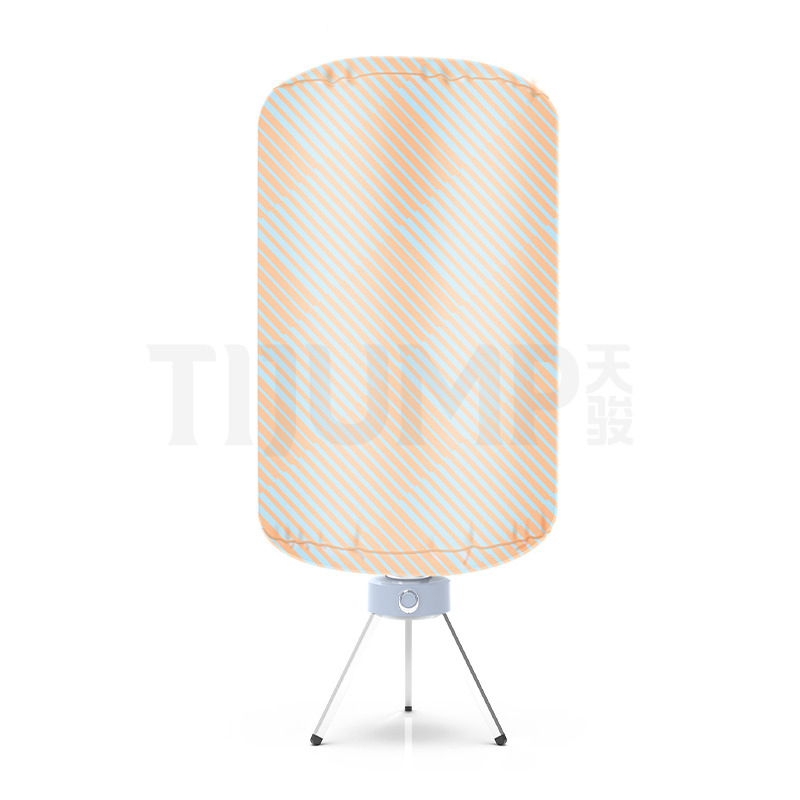
Analysis of ultra-compact, collapsible, or modular frame designs intended for transient use reveals a completely different engineering philosophy. The travelling clothes dryer abandons the traditional rotating drum entirely. Instead, these micro-frames focus on portability, often packing down into luggage-friendly dimensions. The structural frame acts merely as a temporary scaffold to hold garments in a specific orientation while warm air circulates around them.
Strict capacity limitations apply to these devices, often measured in individual garments rather than pounds. They rely on ambient air or low-wattage convection rather than active tumbling. A small heating element gently pushes warm air upward through a collapsible shroud. While highly effective for drying a single dress shirt or a few undergarments in a hotel room, these micro-frames lack the mechanical force and thermal output required to process standard daily laundry loads. They are specialized tools for specific environments, not replacements for permanent appliances.
Measuring the secondary effects of frame design on daily operational costs, environmental impact, and appliance longevity reveals the true cost of running the machine. The physical dimensions of the machine dictate how efficiently it uses electricity, how quickly it degrades fabrics, and how often it requires mechanical maintenance. A poorly sized frame leads to a cascade of operational failures.
The physics of overloading demonstrate how packing a drum beyond its frame-supported capacity restricts airflow, drastically increasing drying time. Moisture extraction relies on the continuous displacement of humid air with dry, heated air. When a drum is stuffed to maximum volumetric capacity, the fabrics form a dense, impenetrable mass. The heated air bypasses the center of the load entirely, skimming only the outer edges. This forces the machine to run for extended periods, wasting electricity and subjecting the outer garments to unnecessary thermal stress.
Impact on the drive belt, idler pulley, and drum rollers accelerates rapidly when the wet weight exceeds the frame's suspension tolerances. The drive motor is calibrated to rotate a specific maximum mass. Exceeding this mass causes the belt to slip, generating friction and heat that degrades the rubber. Simultaneously, the excess weight flattens the rubber drum rollers, causing a rhythmic thumping noise and eventually leading to total rotational failure. We see drive belts snap entirely when users consistently overload standard frames with heavy winter bedding.
Implementing load management best practices is essential for preserving the machine. Separating fabric types, such as isolating heavy cottons from lightweight synthetics, maximizes the efficiency of a specific frame's airflow. Heavy cottons retain significantly more water and require longer exposure to high heat. Mixing them with synthetics in a confined drum space guarantees uneven drying and excessive clothing wear and tear on the lighter fabrics. The machine's moisture sensors will also read the load inaccurately if heavy and light fabrics are mixed.
Frame insulation and internal clearance directly affect heat retention and exhaust efficiency. A well-designed chassis includes adequate thermal barriers that keep heat concentrated inside the drum rather than radiating out into the laundry room. Proper internal clearance allows the exhaust blower to push humid air out of the machine with minimal static pressure resistance. If the frame is too cramped, internal ducting must feature sharp bends, which restricts airflow and traps lint, creating a severe fire hazard over time.
Comparing the thermal efficiency of a tightly packed compact frame versus a standard traditional clothes dryer with adequate internal airflow channels highlights the importance of space. The standard frame allows for a smoother, more direct exhaust path. This reduces the workload on the blower motor and ensures that moisture is evacuated before it can condense back onto the internal chassis walls. Condensation inside the cabinet leads to rust and premature failure of electronic control boards.
Transitioning from legacy gas models to modern electric or heat pump designs, supported by adequate frame architecture, can reduce household emissions by up to 90% depending on the local energy grid. Heat pump models do not vent air externally; they extract moisture, drain it, and reheat the same air. This closed-loop system requires a larger, more robust frame to house the necessary refrigeration components, but the environmental payoff is substantial. The correlation between advanced heat pump technology and significantly reduced clothing wear and tear compared to conventional electric resistance dryers is heavily documented. Heat pumps operate at much lower temperatures, gently extracting moisture rather than baking the fabrics.
Practical steps to ensure the selected appliance fits both the physical space and the user's operational demands prevent costly installation failures. Procurement decisions must rely on hard measurements and realistic usage assessments rather than aesthetic preferences or arbitrary capacity claims. You cannot force a large-capacity frame into a compact closet without violating safety codes.
Calculating required capacity based on existing washing machine volume is the first mandatory step. You must adhere to the industry standard 1:2 ratio of washer volume to dryer volume. If a washing machine holds 3.5 cubic feet of laundry, the paired dryer must offer at least 7.0 cubic feet of internal space. This ratio guarantees that the wet, compressed laundry from the washer has exactly twice the volume to expand, separate, and tumble effectively during the drying cycle. Ignoring this ratio guarantees damp clothes and extended run times.
Factoring in household or commercial laundry frequency and typical fabric types dictates the necessary frame durability. A household processing heavy workwear, denim, and thick towels daily requires a rigid, standard or large-capacity frame with heavy-duty drum rollers. Conversely, a household primarily washing lightweight synthetics and office wear can achieve optimal results with a standard frame, avoiding the unnecessary footprint of an oversized unit. Match the machine's mechanical build to the heaviest items you wash regularly.
Accounting for the hidden footprint is a critical mitigation strategy. The physical dimensions listed on a specification sheet only represent the metal casing. Installers must add 4 to 6 inches to the frame depth for rigid venting connections. Crushing a flexible vent hose against the back wall creates a severe fire hazard and destroys the machine's airflow efficiency. Additionally, providing at least 1 inch of clearance on the sides is mandatory for noise reduction and thermal dissipation. If the machine touches the side walls, the vibration will transfer directly into the building's framing.
Assessing doorway, hallway, and stairwell dimensions prior to procurement avoids delivery failures. A large-capacity frame measuring 29 inches wide cannot physically pass through a standard 28-inch interior doorway without removing the door frame. Installers must map the entire transit path from the exterior entrance to the final laundry room destination, accounting for tight corners and low overhead clearances in basements. We have had to return countless appliances because the homeowner only measured the final laundry closet and forgot to measure the hallway leading to it.
Mandatory Installation Clearances by Frame Type
Clearance Zone | Standard Frame Requirement | Large Capacity Requirement | Compact Frame Requirement |
|---|---|---|---|
Rear (Venting & Power) | 4 to 6 inches | 5 to 7 inches | 3 to 5 inches |
Sides (Vibration & Heat) | 1 inch minimum | 1.5 inches minimum | 1 inch minimum |
Top (Maintenance Access) | 1 to 2 inches | 2 to 3 inches | 1 inch minimum |
Front (Door Swing) | 36 inches | 42 inches | 24 inches |
Frame design is the absolute limiting factor for a clothes dryer's capacity, efficiency, and mechanical durability. You cannot cheat physics; a smaller frame inherently restricts airflow, limits heating technology options, and caps load size. Ignoring the structural reality of the appliance leads to chronic underperformance and premature mechanical failure. To ensure you select the correct unit for your space and operational needs, follow these exact steps before making a purchase.
Measure the exact depth, width, and height of your installation space, adding a mandatory six inches to the rear measurement to accommodate rigid exhaust ducting.
Calculate your washing machine's internal drum volume and multiply it by two to establish your minimum required drying capacity.
Verify the width of all doorways, hallways, and stairwells along the delivery path to ensure the appliance chassis can physically reach the laundry room without structural modifications.
Inspect your electrical panel to confirm you have a dedicated 240V circuit for standard units or a standard 120V outlet if opting for a compact model.
A: The external frame dictates the maximum possible size of the internal drum. A larger frame allows for a larger drum, which provides the necessary volume for clothes to tumble and hot air to circulate effectively.
A: No. A portable clothes dryer has a significantly smaller frame and drum volume (usually under 3.5 cubic feet), meaning it can only process about half the laundry of a traditional unit per cycle.
A: Industry standards recommend a 1:2 ratio. For example, a 3.5 cubic foot washer should be paired with a 7.0 cubic foot dryer to allow wet clothes enough room to expand and dry efficiently.
A: Yes, provided the load size is appropriate. The larger frame allows for greater airflow and tumbling space, which reduces drying time compared to cramming the same amount of laundry into a standard-sized unit.
A: Dryers utilizing heat pump technology operate at lower temperatures and are significantly more energy-efficient than conventional electric resistance clothes dryers, resulting in less thermal damage and reduced wear and tear on fabrics over time.
A: A travelling clothes dryer is designed strictly for temporary, low-volume use (like drying a few shirts or undergarments). Their micro-frames lack the motor power and drum space required for daily, heavy-duty laundry tasks.
A: Exceeding the weight capacity supported by the dryer's frame and suspension strains the drive belt, motor, and drum rollers. It also blocks airflow, forcing the machine to run longer, consume more energy, and unevenly dry mixed fabric types.


