
Views: 0 Author: Site Editor Publish Time: 2026-09-09 Origin: Site
The transition from traditional towel drying to automated body drying technology introduces new expectations for comfort, accessibility, and safety in residential and commercial bathrooms. Substandard heating elements and poor aerodynamic design in early or low-cost drying devices often result in "hot spots"—concentrated areas of intense heat that cause skin erythema, discomfort, and uneven moisture evaporation. When you step out of a shower, your skin is highly sensitive to temperature fluctuations. Applying a concentrated blast of hot air directly to wet skin accelerates evaporation too rapidly in one localized area, stripping natural oils and triggering thermal pain receptors. Mitigating thermal discomfort requires understanding the engineering behind airflow dispersion. This guide provides a technical framework for evaluating how modern body dryers utilize indirect heat, multi-directional airflow, and thermostatic controls to ensure safe, uniform drying.
Airflow Dispersion is Critical: High-end models prevent hot spots by utilizing diffused, multi-directional air delivery rather than concentrated, unidirectional blasts.
Thermostatic Regulation: Advanced units employ internal thermistors to continuously monitor and adjust output temperatures, preventing the heating element from exceeding safe dermal thresholds.
Indirect Heat Application: By mixing ambient air with heated air, a quality body drying machine creates an "air shower" effect that accelerates evaporation without relying on excessive, direct thermal radiation.
Maintenance Impacts Safety: Regular cleaning of intake filters is mandatory; restricted airflow is the primary cause of internal overheating and subsequent hot spot generation.
Direct heat involves radiant elements positioned close to the skin, transferring thermal energy rapidly and often unevenly. When a heating coil operates without sufficient airflow buffering, it projects raw thermal radiation. Indirect heat, conversely, relies on convective drying via warmed air. Think of a professional hooded salon dryer. It warms the surrounding microclimate to dry the surface without bringing the skin into direct proximity with raw heating coils. Indirect heat significantly lowers the vulnerability of the epidermis to thermal damage.
In poorly designed units, proximity to the nozzle correlates directly with dangerous temperature spikes. If you stand two inches from a standard heat vent, the temperature might register at 130°F. Step back to twelve inches, and it drops to 90°F. This drastic gradient creates localized hot spots. A well-engineered Body Dryer mixes ambient room air with the heated stream before it ever exits the chassis, stabilizing the temperature gradient regardless of how close you stand to the unit.
Heat Application Method | Mechanism of Action | Risk of Hot Spots | Ideal Use Case |
|---|---|---|---|
Direct Radiant Heat | Infrared transfer directly from element to skin | Very High | Space heating, not personal drying |
Concentrated Convection | High-velocity air through a single narrow nozzle | High | Hand-held hair drying (requires constant motion) |
Diffused Convection | High-volume, low-velocity air mixed with ambient air | Low | Full-body automated drying |
Static pressure, air velocity, and heat distribution share a delicate balance. Narrow output vents create high-velocity thermal columns that overwhelm the skin's local thermal receptors. When air moves too fast through a restricted opening, it doesn't have time to mix with the cooler ambient air. This results in a harsh, stinging sensation on wet skin.
Manual drying techniques force the user to constantly move a hand-held dryer to avoid localized heat damage. You physically compensate for the device's poor dispersion by waving it around. Automated, stationary engineering eliminates this physical requirement. The baseline success criteria for optimal drying rely on high volume (measured in Cubic Feet per Minute or CFM), moderate velocity, and strictly controlled temperature. You want a massive wall of warm air, not a laser beam of hot air.
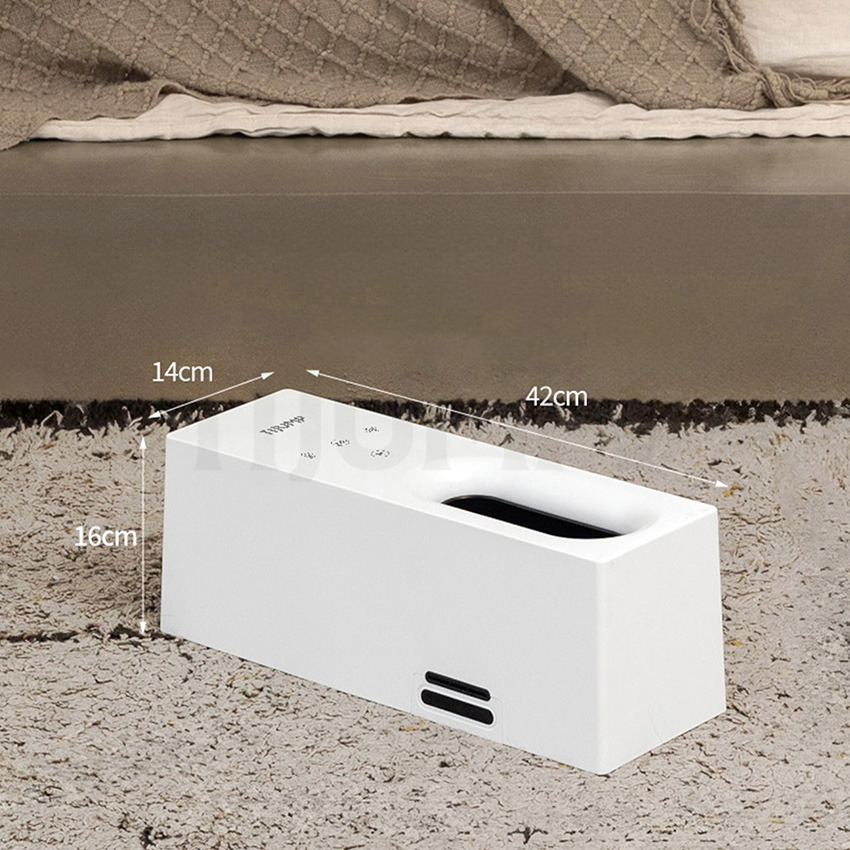
The mechanics of an air shower body and feet dryer system depend on spatial coverage. Multi-axis nozzles or full-length vertical louvers distribute air evenly across the entire body surface simultaneously. Instead of forcing air out of a single six-inch opening, premium units utilize vertical slots spanning several feet.
This architectural choice eliminates manual repositioning. You do not need to spin around or lift your arms repeatedly to get dry. The multi-directional flow wraps around the contours of the body, utilizing the Coanda effect where air naturally follows the curvature of surfaces. This ensures that even hard-to-reach areas receive adequate, gentle evaporation without subjecting the chest or shoulders to excessive heat.
Positive Temperature Coefficient (PTC) heating elements self-regulate heat output, adapting to airflow changes dynamically. Unlike traditional nichrome wire coils that continue to heat up as long as power is applied, PTC ceramic stones increase their electrical resistance as they get hotter. This physical property naturally caps their maximum temperature, making them inherently safer.
Internal thermistors act as a primary fail-safe. These sensors continuously monitor the air temperature inside the mixing chamber. If the internal chamber temperature exceeds operational limits—usually due to a blocked intake—the thermistor cuts power to the heating element while leaving the fan running to cool the system down. Redundant physical thermal fuses provide a secondary backup against duty-cycle overruns. User-adjustable temperature profiles accommodate different ambient room temperatures and varying degrees of skin sensitivity, ensuring the microclimate remains comfortable year-round.
Aerodynamic baffles and diffusers within the unit's chassis manage internal air pressure. These components break up concentrated heat streams before they exit the machine. When air passes over the heating element, it is chaotic and unevenly heated. Baffles force this air to tumble and mix inside a plenum chamber.
Laminar flow is prone to creating hot spots due to its straight, uninterrupted trajectory. If you blow a straight line of hot air, it hits one spot on the skin. Controlled turbulent flow is superior for rapid, even evaporation across complex anatomical surfaces. By introducing micro-vortices into the air stream, the dryer ensures that the thermal energy is spread across a wider footprint by the time it makes contact with the user.
Thermal consistency dictates that the device must maintain a variance of less than a few degrees across the entire output zone. If the air hitting your knees is 70°F but the air hitting your chest is 110°F, the machine is failing at dispersion. Assessing the evaporation rate requires balancing heat and airflow volume to achieve complete drying within 2 to 5 minutes without exceeding 100°F (37.8°C) at the skin level.
To test this during installation, contractors often use thermal imaging cameras or simple infrared thermometers. Run the unit for three minutes and scan the output column. The temperature should be uniform from top to bottom. Any spike indicates a flaw in the internal baffling or a misaligned heating element.
Personal hand-held dryers have low duty cycles and overheat quickly if left running. They are built for five to ten minutes of intermittent use. Commercial-grade units are engineered for continuous operation. In a busy household or a public locker room, a dryer might run back-to-back for an hour.
Robust housing materials and internal heat sink designs prevent the exterior casing from becoming hot to the touch during extended drying sessions. High-grade ABS plastics or powder-coated aluminum enclosures dissipate internal heat efficiently. If the outside of the machine burns you when you lean against it, the internal thermal management is inadequate.
Users with compromised skin integrity, such as those with neuropathy or diabetes, may not feel a hot spot forming. Reduced peripheral sensation means a user might sustain a first-degree burn before realizing the air is too hot. A high-quality body drying machine mitigates this risk through automated, even heat distribution.
This supports users with limited mobility who cannot easily rotate their bodies to manage thermal exposure. Wheelchair users, the elderly, or individuals recovering from surgery rely on the machine to do the work. The airflow must envelop them completely without requiring them to shift their weight or adjust their posture to avoid getting burned.
Essential electrical safety ratings, such as UL or CE marks, validate internal engineering standards. You cannot install uncertified electrical equipment in a wet zone without violating building codes and voiding insurance policies. Ingress Protection (IP) ratings dictate safe operation in wet environments.
IPX4 Rating: Protects against splashing water from any direction. Suitable for installation just outside the shower enclosure.
IPX5 Rating: Protects against low-pressure water jets. Required if the unit is installed inside a large walk-in shower where it might get directly sprayed by a hand wand.
Automatic shut-off timers prevent prolonged exposure and mechanical overheating. Most units default to a 10-minute maximum run time. If the user falls or leaves the room, the machine will not run indefinitely, thereby preventing a massive buildup of ambient heat in a small, enclosed bathroom.
Buyers face a compromise between utilizing higher heat for faster drying times versus prioritizing lower, diffused heat for maximum skin comfort. You can dry someone in 60 seconds if you blast them with 140°F air, but it will be an incredibly unpleasant and potentially dangerous experience. Higher motor wattage does not equal better performance if the air is poorly distributed.
Airflow design always supersedes raw thermal output when evaluating safety and comfort. A 1200W motor with exceptional baffling and a massive intake fan will dry you faster and more comfortably than a 2000W motor pushing air through a tiny, restrictive nozzle. Look at the CFM rating first, and the wattage second.
In-wall recessed units contrast sharply with surface-mounted units. Recessed units often feature better internal ducting for heat dispersion, minimizing the external footprint. They sit flush with the tile, offering a sleek aesthetic and zero intrusion into the bathroom space.
However, they require significant structural modification. You have to open the wall, re-route studs, manage insulation, and run dedicated wiring inside the cavity. This results in higher upfront costs and longer installation times. Surface-mounted models are essentially plug-and-play or require a simple hardwire connection to a surface junction box. They protrude into the room but offer much easier access for maintenance and repairs.
Installing the unit too close to direct water spray or in poorly ventilated alcoves leads to humidity recycling and reduced drying efficiency. If the machine is pulling in air that is already at 100% relative humidity, it cannot evaporate moisture off your skin. It will just blow hot, wet air at you.
Strategic placement guidelines demand adequate clearance for ambient air intake. Ensure the machine pulls in dry air rather than saturated steam. Install the unit near the bathroom exhaust fan or near the door where fresh air enters the room. Maintain at least 12 inches of clearance around the intake vents to prevent choking the motor.
Users often hang towels, bathrobes, or clothing directly over the chassis. This blocks the intake vents and causes rapid thermal buildup. When the motor cannot pull in fresh air, the internal temperature skyrockets in seconds, triggering the thermal fuses and shutting the unit down.
Select units designed with sloped tops, recessed intakes, or physical guards that prevent objects from being rested on or draped over the active airflow pathways. If the design makes it impossible to hang a towel on it, you eliminate the number one cause of mechanical failure in these devices.
Accumulation of dust, lint, and hair in the intake filter restricts airflow. This forces the internal heating element to overheat and project localized hot air. A clogged filter turns a safe, diffused air stream into a weak, dangerously hot trickle.
Establish a strict maintenance protocol for your heated body dryer. Follow these steps to ensure longevity:
Turn off the power at the breaker before performing any maintenance.
Locate the intake filter housing, usually positioned at the top or sides of the unit.
Unclasp or unscrew the filter cover using the appropriate hand tools.
Remove the washable mesh filter and rinse it under warm water to remove dust and hair.
Allow the filter to dry completely before reinstalling it to prevent moisture from entering the motor housing.
Measure your available bathroom wall space to ensure adequate clearance for ambient air intake and exhaust pathways.
Verify your electrical panel capacity with a licensed electrician to confirm support for a dedicated 15A or 20A circuit.
Review the Ingress Protection (IP) ratings of your shortlisted models to guarantee safe operation in your specific wet zone.
Establish a recurring monthly calendar reminder to inspect and clean the intake filters to maintain aerodynamic efficiency.
A: Advanced units utilize internal thermistors, PTC heating elements, and diffused airflow. These components work together to regulate output, keeping surface temperatures well below the threshold for thermal skin damage.
A: Yes. Indirect, convective heat is gentler on sensitive skin compared to the physical friction of towel drying or the intense exposure of direct radiant heat.
A: Uneven heat usually stems from restricted airflow. Check for a clogged intake filter, a malfunctioning internal baffle, or physical obstructions blocking the intake vents.
A: Continuous operation transfers ambient heat into the room. Standard bathroom ventilation or exhaust fans should run during use to manage humidity and temperature increases.
A: The standard safe operating range is typically between 75°F and 95°F. This varies based on ambient room temperature and individual user preference.
A: High-draw heating elements usually require their own dedicated 15A or 20A breaker to prevent overloading the existing bathroom circuit.


